I left home at nineteen with nothing but a duffel bag, a second-hand passport, and the faint memory of my mother's kitchen.
She used to cook cardamom rice on Sunday mornings — the kind that filled the whole flat with a sweetness that felt permanent. I did not think, at nineteen, that I would spend the next seven years trying to find that smell again.
The first city was Berlin.
Cold, efficient, beautiful in a way that had nothing to do with warmth. I worked at a bar in Kreuzberg and learned to say I am from India in four different languages, because people always asked.
I answered the question but never quite answered it — because to say where you are from is also to say where you belong, and I had begun to suspect those were not the same place for me.
Paris was next.
Three years, a small room above a boulangerie on Rue du Temple, a series of jobs that required me to smile at strangers and pretend I knew where things were.
I was good at pretending. I was less good at sleeping.
At night, the city hummed with a confidence I could not locate in myself — the certainty of knowing exactly which street you are on, which café is yours, which corner of the world you occupy.

A Fragrance That Felt Like Home
It was a Tuesday in October when I walked into the shop on Rue Lepic, more for shelter from the rain than out of any particular intention.
The woman behind the counter did not look up immediately. She was wrapping something in tissue paper with the concentration of someone defusing a device.
When she finally raised her eyes, she asked — in French, then English — what kind of memory I was looking for.
I did not have an answer ready.
I said: something warm. Something like a Sunday.
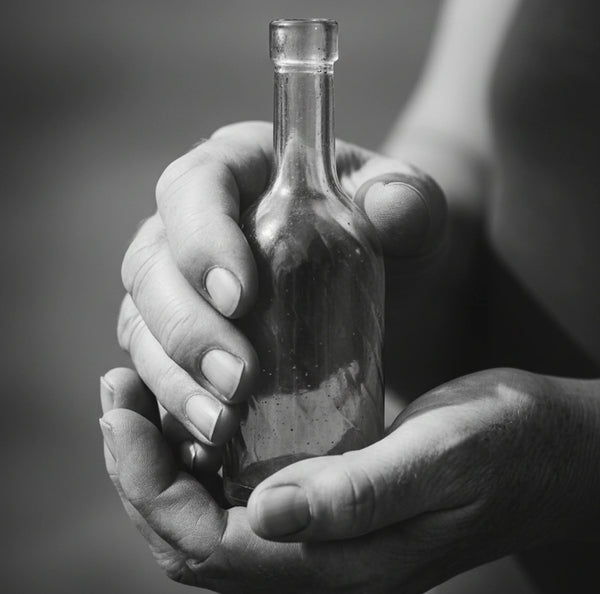
She nodded as if this was a perfectly ordinary thing to say, walked to the third shelf on the left, and returned with a small bottle.
Dark glass. No elaborate label.
She said: This one smells like the inside of a home where someone has been cooking all morning.
I stood in that aisle for twelve minutes with my wrist pressed to my face.
I know it was twelve minutes because the woman told me afterward, gently, that she had been watching the clock. She thought something was wrong.
Nothing was wrong.
I had simply, for the first time in seven years, stopped moving.
The scent of cardamom, warm spices, monsoon earth and soft woody notes took me somewhere I had not been able to reach for years.
It reminded me of my mother's kitchen — translated into a language that could travel with me.
I had been looking for belonging in cities.
It had been waiting for me in a bottle.
When Perfume Becomes a Memory
I bought it.
I flew home to Delhi four months later.
My mother was standing at the door when I arrived, and I hugged her for longer than I usually allow myself to.
She smelled of cardamom.
I smelled of Paris.
Between us, we were the whole story.
Maybe that is what makes a unisex perfume more than just a fragrance.
A scent can become a memory. It can remind you of a person, a place, a season, or a moment you thought you had left behind.
A warm unisex fragrance can feel different on everyone who wears it, yet still tell a story that feels deeply personal. Notes of cardamom, spices and woods can create a comforting fragrance that moves effortlessly between seasons, occasions and individual identities.
And perhaps that is why the most memorable perfumes are not always the loudest ones.
Sometimes, the fragrance that stays with you is the one that feels familiar.
The one that reminds you of Sunday mornings.
The one that takes you back home.
Because fragrance is not just something you wear. Sometimes, it is somewhere you return to.